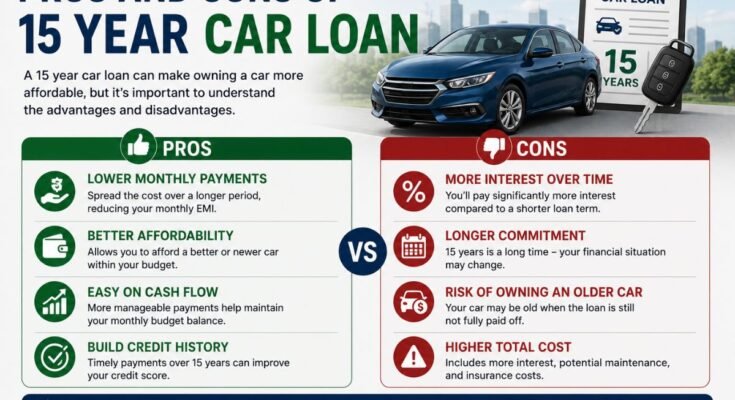
Car prices in the USA keep rising every year. For many buyers, affording a vehicle has become harder. That is why longer loan options are becoming more popular. One of the most talked-about options right now is a 15-year car loan. But is it actually a good deal? Understanding the pros and cons of 15 year car loan is essential before you make any decision. At Quickguidespace, we want to give you a clear and honest breakdown so you can choose what is best for your financial future.
What Is a 15 Year Car Loan?
Before diving into the pros and cons of 15 year car loan, let us quickly explain what it is. A 15-year car loan gives you 180 months to repay the money you borrowed to buy a vehicle. Standard car loans in the USA usually run for 36 to 84 months. A 15-year term is much longer than anything most lenders currently offer as a standard product.
The idea behind this loan type is simple. Stretch the repayment period and lower the monthly cost. But the pros and cons of 15 year car loan tell a more complex story. There are real benefits and serious risks that every buyer should understand fully.
Advantages and Disadvantages of Long-Term Car Loans
To understand this loan type, you first need to look at the broader picture of advantages and disadvantages of long-term car loans. Long-term loans have existed for a while in various forms. The longer the term, the lower your monthly payment. That is the core appeal.
But the advantages and disadvantages of long-term car loans also show that the total cost goes up significantly the longer you borrow. Interest builds every month. Over 15 years, that interest can easily exceed the original price of the car. This is the central tension when weighing the pros and cons of 15 year car loan. What you save monthly, you often lose in total.
The Pros: Extended Auto Financing Benefits
Let us start with the positives. There are real extended auto financing benefits that make a 15-year loan appealing to certain buyers.
The biggest benefit is budget relief. Lower monthly payments free up cash for other essentials. For a family struggling with rent, groceries, and childcare, a smaller car payment can make a real difference. This is one of the genuine extended auto financing benefits that supporters of longer loan terms point to.
Another positive in the pros and cons of 15 year car loan is access. Some buyers cannot qualify for a more expensive car on a short loan because the monthly payment is too high. A 15-year term makes that vehicle accessible. It also allows buyers to choose a more reliable or safer vehicle rather than settling for a cheap option that may cost more in repairs later.
Extended auto financing benefits can also include more breathing room in emergencies. When your monthly car payment is low, you have more room in your budget if something unexpected happens. That flexibility can matter a lot for working-class Americans.
Low Monthly Car Payment Options and Their Appeal
One of the most attractive aspects of this loan type is the low monthly car payment options it creates. If you borrow $35,000 at 7% over 15 years, your monthly payment could be as low as $315. Compare that to a 5-year loan on the same amount, where you might pay around $693 per month.
Low monthly car payment options like this sound great on paper. And for some buyers, they genuinely help. But Quickguidespace always encourages people to think past the monthly number. That $315 payment over 180 months adds up to over $56,000 in total. You borrowed $35,000 but paid back more than $56,000. That gap is all interest.
So while low monthly car payment options give you short-term relief, they come with a long-term cost that is hard to ignore when examining the full pros and cons of 15 year car loan.
The Cons: Risks of Extended Auto Financing
Now let us look at the serious risks. The extended auto financing benefits have a flip side, and it is important to see it clearly.
The first major risk pros and cons of 15 year car loan is total interest cost. As shown above, you can end up paying tens of thousands more than the car’s original price. That money goes to the lender, not to you. It is money that could have gone toward savings, a home, or your children’s education.
The second risk is depreciation. Cars lose value very fast. Most vehicles lose half their value within five years. On a 15-year loan, your car could be nearly worthless by the time you finish paying. You would be making payments on a vehicle with very little market value. This connects directly to the pros and cons of 15 year car loan debate and is one of the strongest arguments against choosing this option.
Long-Term Vehicle Loan Repayment Plans and Negative Equity
Long-term vehicle loan repayment plans carry a serious risk called negative equity. This means you owe more than the car is worth. With a 15-year loan, this situation can last for many years.
If you need to sell the car or trade it in early, you may still owe a large balance. You would have to pay the difference yourself or roll the debt into a new loan. Long-term vehicle loan repayment plans trap many buyers in a cycle of debt that is hard to escape.
Another problem with pros and cons of 15 year car loan is reliability. A car bought today will be 15 years old by the time the loan ends. Most warranties expire in 3 to 5 years. You could be paying monthly installments while also spending on major repairs. That doubles your financial stress significantly.
Car Loan Interest Cost Comparison: Short vs Long Term
A car loan interest cost comparison makes everything crystal clear. Look at two scenarios on a $30,000 loan at 6% interest.
On a 60-month loan, total interest paid is roughly $4,800. On a 15-year loan, total interest paid could reach $28,000 or more. That car loan interest cost comparison shows you are paying almost as much in interest as you originally borrowed. No vehicle is worth that total price when you add it all up.
A smart pros and cons of 15 year car loan always favors shorter terms when total cost is the priority. Quickguidespace recommends running these numbers yourself using any free online loan calculator before you make a final choice.
Conclusion
The pros and cons of 15 year car loan come down to one simple trade-off. You get lower monthly payments now but pay far more in the long run. The advantages and disadvantages of long-term car loans are real on both sides. Extended auto financing benefits like budget relief and accessibility are genuine. But the risks of high interest, negative equity, and long-term debt are just as real. Low monthly car payment options feel helpful today but can cost you thousands more over time.
Always run a car loan interest cost comparison and think carefully about long-term vehicle loan repayment plans before committing. Visit Quickguidespace for more simple pros and cons of 15 year car loan, honest guides to help you make the best financial decisions for your life in the USA.
FAQs
Q1. What are the main pros and cons of 15 year car loan?
The main pro is a lower monthly payment. The main cons are very high total interest costs, long-term debt, and the risk of owing more than the car is worth for many years.
Q2. How does a car loan interest cost comparison help buyers?
It shows the total amount you will pay over the life of the loan including interest. This helps you see whether a lower monthly payment is actually saving you money or costing you more overall.
Q3. What are the extended auto financing benefits for tight budgets?
Lower monthly payments free up cash for other living expenses. Pros and cons of 15 year car loan can help buyers who need a reliable vehicle but have limited monthly income available for a car payment.
Q4. What are long-term vehicle loan repayment plans and their risks?
These are loan plans that stretch repayment over many years such as 10 to 15 years. The main risks include negative equity, high interest costs, and paying for a vehicle that may no longer be reliable.
Q5. Are low monthly car payment options always a good deal?
Not always. While they help with short-term budgeting, they usually result in paying much more in total over the life of the loan. Always calculate the full repayment amount before deciding.
Q6. Can I pay off a pros and cons of 15 year car loan early?
Many lenders allow early repayment. However, some charge a prepayment penalty. Always check the loan terms before signing to understand your options for paying it off sooner.
Q7. Where can I learn more about car loan options in the USA?
Visit Quickguidespace for easy, beginner-friendly pros and cons of 15 year car loan covering all types of car loans, interest rates, repayment tips, and smart money advice for everyday American buyers.