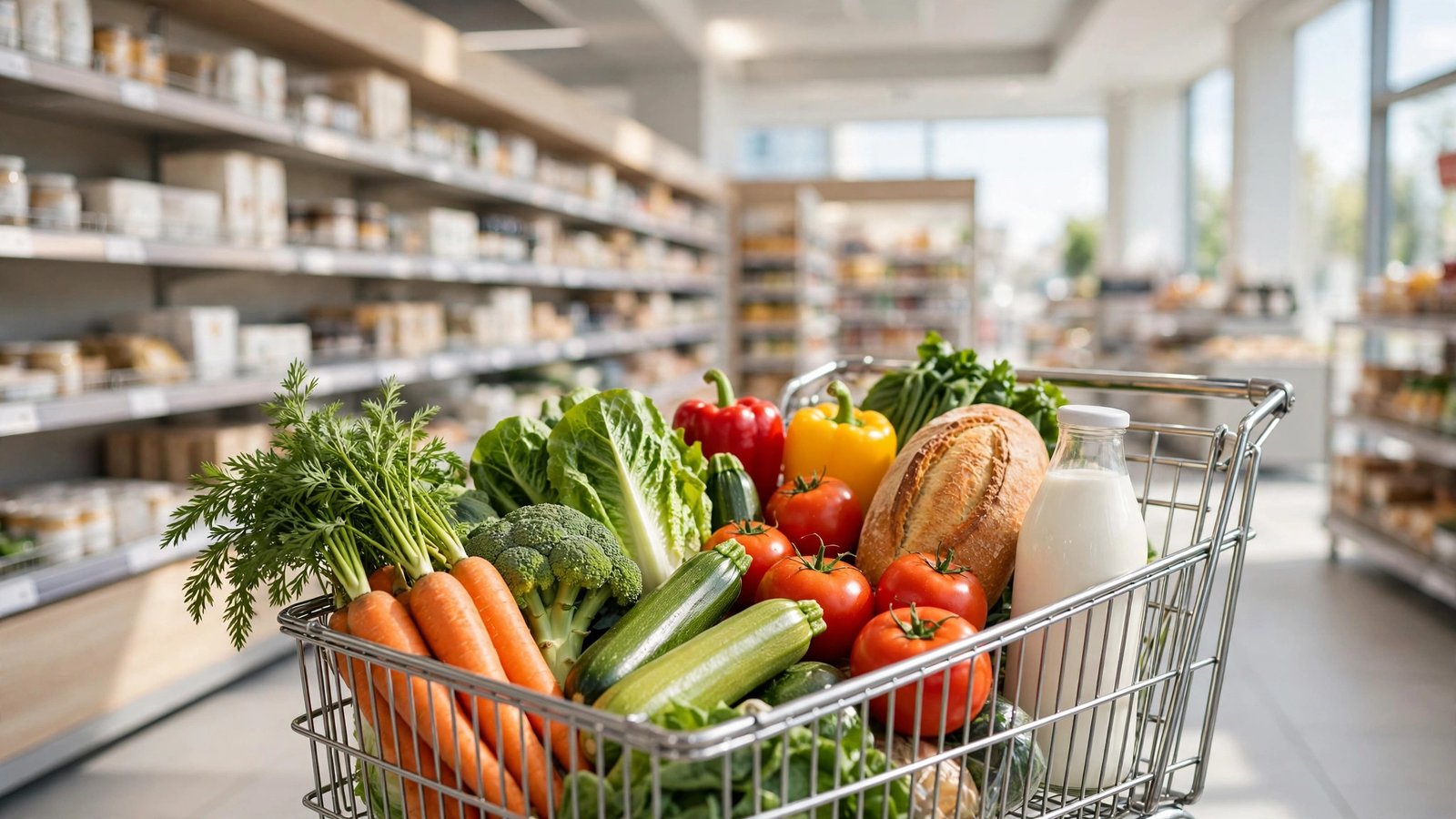
Cutting your grocery bill in half sounds like one of those things people say but nobody does. It’s not. A family spending $1,000 a month on groceries can get to $500 — not by eating rice and beans forever, but by running groceries like a system instead of a habit.
This isn’t about extreme couponing or driving to six stores. It’s four strategies, each backed by real numbers, that stack to roughly 50%. Here’s the full playbook.
The Starting Point: Know Your Number
The USDA’s moderate-cost food plan puts one adult at about $441/month (~$102/week). A family of four runs $1,000–$1,300/month. Most people overspend by 20–30% without realizing it, because groceries are the budget line nobody audits.
Step zero: look at your last 3 months of grocery spending. Not a guess — the actual number from your bank statements. That’s your baseline. If your family spends $1,000/month, your target is $500. Every strategy below is measured against that goal.
If your biggest grocery line is a warehouse-club habit, read is Costco Executive membership worth it for groceries before you start — the answer changes your plan.
Strategy 1: The Store-Brand Swap (Save 15–20%)
This is the single biggest, easiest lever. Store-brand (private label) products are 15–25% cheaper than national brands, and for pantry staples — pasta, rice, canned tomatoes, frozen vegetables, milk, eggs — the quality difference is negligible.
| Basket (weekly) | National brands | Store brand | You save |
|---|---|---|---|
| Milk, eggs, bread, pasta, rice, canned goods, frozen veg, snacks | $180 | $144 | $36/week |
$36/week = $144/month = $1,728/year. Just from switching labels, not changing a single meal.
The rule: swap everything that’s a commodity (flour, sugar, oats, canned beans, frozen berries) and only keep brands where you genuinely taste the difference. Most people end up keeping 5–10 brand items and swapping 50+.
Strategy 2: The Waste Audit (Save 10–15%)
The average American household wastes roughly 30% of the food it buys — about $1,500/year for a family. You’re not just overpaying; you’re buying food and throwing it away.
Run a one-week waste audit:
- Every time you throw food away, write it on a list on the fridge.
- At week’s end, total the approximate value. Most families find $25–$50/week in the trash.
- Buy less of exactly those items next week.
Common killers: bagged salads, fresh berries, bread, milk near expiry, leftovers nobody eats. The fix is boring: shop with a list built around what you already have, cook one “clean out the fridge” meal per week, and freeze anything that won’t be eaten in 2 days.
| Weekly waste eliminated | Monthly savings | Yearly savings |
|---|---|---|
| $30/week | $120 | $1,440 |
Combined with store-brand swaps, you’re already at ~30% savings. Halfway to half.
For more tactics that don’t involve coupons at all, see how to save money on groceries without coupons.
Strategy 3: Markdown Timing (Save 10–15%)
Every grocery store marks down perishables on a schedule — and the markdowns are deep. Meat at 30–50% off, bakery at 50% off, dairy near expiry at 25–40% off.
How to catch them:
- Shop early morning or late evening. Most stores mark down the morning’s perishables before 9 AM and do a second round after 7 PM.
- Ask the meat and bakery departments when they mark things down. They’ll tell you — it’s a routine question.
- Buy and freeze. Markdown meat at 40% off goes straight into the freezer. A $12 steak becomes $7. A $9 rotisserie-adjacent roast becomes $5.
| Markdown buys per week | Weekly savings | Yearly savings |
|---|---|---|
| $40 of markdown meat/produce at ~40% off | $16 | $832 |
Strategy 4: The Two-Stop Strategy (Save 10–15%)
One store is never the cheapest for everything. The two-stop system: one trip for staples at the cheapest store, one for everything else.
- Stop 1: Discount store (Aldi, Lidl, or warehouse club) for pantry staples, dairy, eggs, frozen goods, produce basics. Typically 20–30% cheaper than a conventional supermarket.
- Stop 2: Your regular store for the remaining 30% of items — the specific brands, specialty items, and fresh fish you can’t get at the discount stop.
The mistake is treating every trip as a full shop. The two-stop system adds maybe 20 minutes a week and cuts the staples portion — usually 60–70% of the bill — by a quarter.
| Weekly staples spend | One-store price | Two-stop price | Savings |
|---|---|---|---|
| $140 | $140 | $105 | $35/week = $1,820/year |
And don’t forget the card in your wallet: if your card gives 3–6% back on groceries, you’re leaving $200–$500/year on the table. Check the best credit card for groceries to make sure you’re earning it.
The Math: How It All Stacks to 50%
Start: $1,000/month family grocery spend.
| Strategy | Monthly savings | Running total |
|---|---|---|
| Store-brand swaps (−18%) | $180 | $180 |
| Waste audit (−12%) | $120 | $300 |
| Markdown timing (−8%) | $80 | $380 |
| Two-stop system (−10%) | $100 | $480 |
$480/month saved = $5,760/year. That’s not exactly 50% — it’s 48%. Close the last 2% by meal-planning three dinners a week, and you’re there.
The Meal-Planning Multiplier
Every strategy above saves money on food you buy. Meal planning saves money on food you don’t buy. The average unplanned grocery trip includes 20–30% impulse purchases — snacks, extras, and “that looks good” items that never get eaten.
The 15-minute weekly system:
- Check the fridge and pantry first. Build the week’s plan around what you already have.
- Pick 4 dinners, not 7. Nobody meal-plans perfectly. Plan four; the other nights are leftovers, clean-out-the-fridge, and one flexible night.
- Make the list from the plan. If it’s not on the list, it doesn’t go in the cart.
- Cook one double batch. Sunday’s soup becomes Tuesday’s lunch. One cooking session, two meals.
| Habit | Weekly savings |
|---|---|
| List-only shopping (kills impulse buys) | $20–$40 |
| One double-batch cook (replaces 2 takeout lunches) | $20–$30 |
| Clean-out-the-fridge dinner (1×/week) | $15–$25 |
Meal planning alone is worth another $55–$95/week for a family — and it stacks with everything above, because you’re planning around markdown buys and store-brand staples.
One warning: don’t let “saving money” turn into buying in bulk what you won’t finish. The warehouse-club trap is real — a 5-pound bag of spinach that rots is more expensive than a fresh $2 bag. Bulk buying only saves money on things with a long shelf life (rice, pasta, canned goods, frozen items, paper products) or things you’ll genuinely use up this week. When in doubt, buy less and shop twice.
Start this week, not next month. Pick two strategies — store-brand swaps and list-only shopping — and run them for seven days. Most families see a $50–$80 difference in the very first week. That early win is what turns a system into a habit.
The Bottom Line
Nobody cuts their grocery bill in half with one trick. It’s four systems, each worth 8–18%, stacked together: swap the labels, audit the waste, time the markdowns, and split your shopping between two stores. Start this week with just Strategy 1 and 2 — that’s already 30% — and add the rest once the habit sticks.