Missing a personal loan payment is stressful. Defaulting on the loan — failing to repay it as agreed — is far more serious. It can damage your credit for years, trigger aggressive collection efforts, and in some cases land you in court.
The good news: default does not happen overnight, and you usually have options to avoid it if you act early. This guide walks through exactly what default means, what happens step by step, how bad the damage really is, and what you can do instead.
What Does "Default" Actually Mean?
A late payment and a default are not the same thing:
- Late payment: You miss the due date. The lender may charge a late fee and report the late payment to the credit bureaus (usually after 30 days past due).
- Default: You have failed to make payments for an extended period, and the lender considers the loan agreement broken. For personal loans, this typically happens after 90 to 180 days of missed payments, though the exact timing is defined in your loan contract.
Once a loan is in default, the lender can demand the entire remaining balance immediately — a clause called "acceleration" that appears in most loan agreements. Instead of owing monthly payments, you suddenly owe everything at once.
What Happens Step by Step: The Default Timeline
Days 1–30: Late Fees and Reminders
After a missed due date, your lender will charge a late fee (often $25–$50) and start contacting you. At this stage the situation is fixable: paying what you owe plus the fee usually resolves it, and nothing has been reported to the credit bureaus yet.
Days 30–90: Credit Damage Begins
Once a payment is 30 days past due, the lender will typically report it to the three major credit bureaus. A 30-day late mark can drop your credit score significantly — often by 60 to 100+ points depending on where you started. At 60 and 90 days past due, additional marks are reported and the damage deepens.
Days 90–180: Default and Collections
Around 90 to 180 days of missed payments, the lender will usually declare the loan in default. At this point:
- The lender may charge off the account — an accounting term meaning they have written it off as a loss. A charge-off is one of the most damaging marks possible on a credit report.
- Your account is often sold or transferred to a collection agency. The original lender sells the debt for pennies on the dollar, and the collector will try to recover the full amount from you.
- Collection calls and letters intensify. Collectors must follow the Fair Debt Collection Practices Act (FDCPA), which limits when and how they can contact you and prohibits harassment, threats, and deception.
After 180 Days: Lawsuits Become Possible
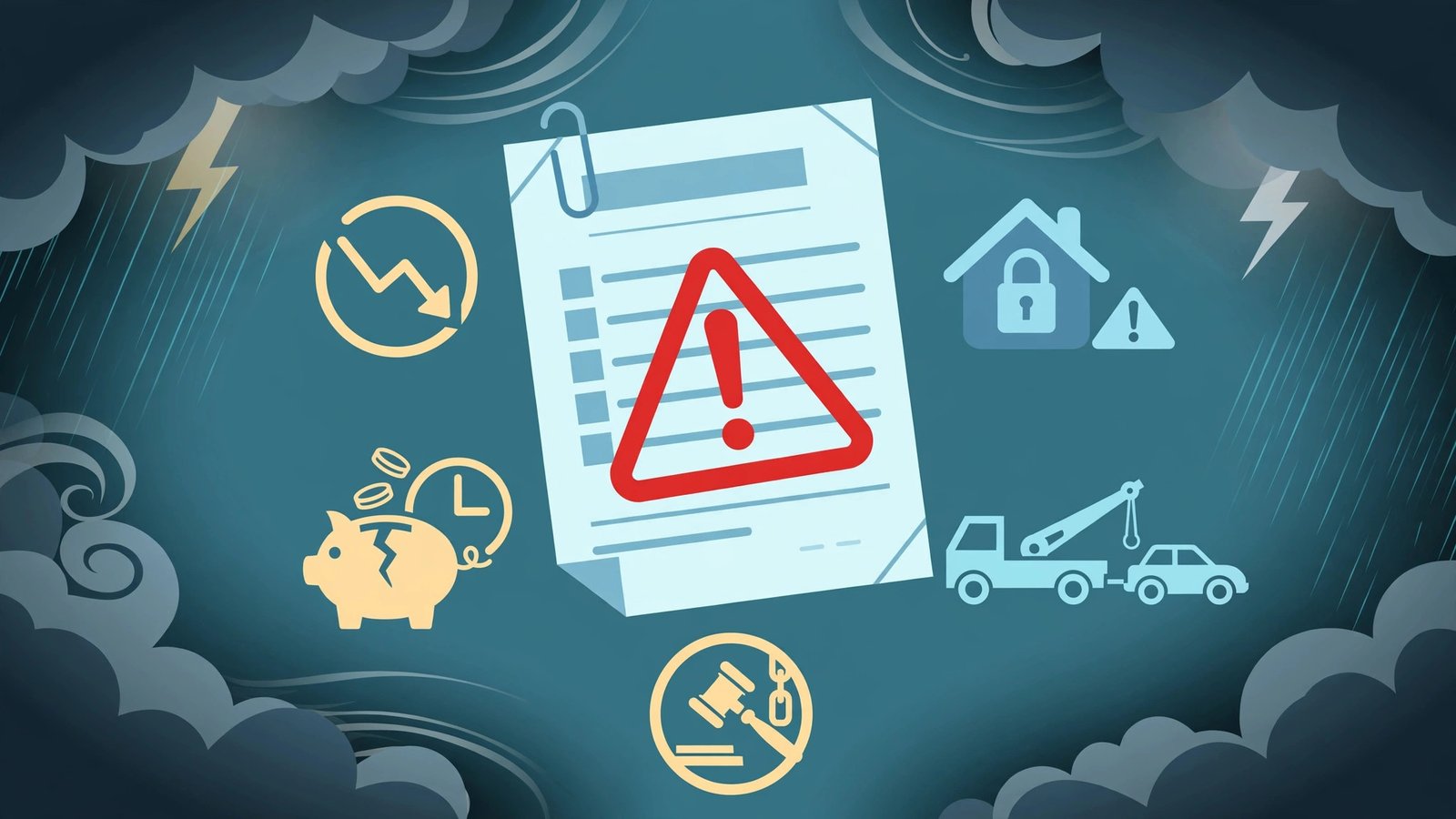
If collections fail, the lender or collection agency may sue you for the unpaid balance. This is more likely with larger balances, since suing costs money. If they win — and they often do when borrowers do not respond — the court issues a judgment against you. A judgment can lead to:
- Wage garnishment: In most states, a portion of your paycheck can be taken directly to repay the debt, subject to federal and state limits.
- Bank account levy: A creditor with a judgment can in some states freeze and seize funds from your bank account.
- Property liens: A judgment lien can be attached to property you own, which must be paid when you sell.
How Badly Does Default Hurt Your Credit?
Very badly. Payment history is the biggest factor in your credit score, and a default — preceded by months of late payments and possibly a charge-off — devastates it. A single default can drop a good score by 100 points or more, and the marks can remain on your credit reports for up to 7 years from the date of the first missed payment.
During those years, getting approved for credit cards, auto loans, mortgages, or even rental housing becomes much harder — and when you do get approved, expect high interest rates and large deposits. Recovery is possible, but it is slow: rebuilding typically takes years of consistent on-time payments.
Can You Go to Jail for Not Paying a Personal Loan?
No. In the United States, you cannot be jailed simply for failing to pay a personal loan or other civil debt. Debtors' prisons were abolished long ago.
The one exception to be aware of: if a court orders you to appear (for example, in a debt lawsuit) and you ignore the court order, a judge can issue a warrant for contempt of court. That is about disobeying the court, not about the debt itself. So if you are sued, always respond and show up.
What About a Cosigner?
If someone cosigned your personal loan, default hurts them too. The lender can pursue your cosigner for the full balance, and every late payment and the default itself will appear on their credit report as well. Defaulting on a cosigned loan can damage both your credit and an important personal relationship.
What to Do Instead of Defaulting
If you are struggling to make payments, do not just stop paying and hope for the best. Almost every option below is better than default:
1. Call Your Lender Immediately
This is the single most important step. Lenders would rather work with you than chase you through collections. Many offer hardship programs that temporarily reduce or pause payments, modified payment plans with lower monthly amounts, or due-date changes to match your pay schedule. Call before you miss a payment if possible — lenders are most flexible with borrowers who communicate early.
2. Ask About Forbearance or Deferment
Some lenders allow you to pause payments for a few months during a hardship such as job loss or medical emergency. Interest usually keeps accruing, but it buys you breathing room without the account going delinquent.
3. Consider Debt Consolidation
If high payments across multiple debts are the problem, consolidating into one loan with a lower rate or longer term can reduce your monthly burden. Be careful: a longer term means more total interest, but it may be the difference between paying and defaulting.
4. Talk to a Nonprofit Credit Counselor
Nonprofit credit counseling agencies offer free or low-cost help. A counselor can review your budget, negotiate with lenders, and set up a debt management plan with reduced payments. Avoid for-profit "debt relief" companies that charge large upfront fees.
5. As a Last Resort: Know Your Rights in Collections
If your debt has already gone to collections: you have the right to request debt validation (proof you owe it), you can dispute inaccurate information with the credit bureaus, and you can negotiate a settlement for less than the full balance — get any agreement in writing before paying. Collectors cannot harass you, call at unreasonable hours, or threaten actions they cannot legally take.
Can You Recover After a Default?
Yes, but it takes time and discipline:
- Pay or settle the debt if you can. A "paid" or "settled" status looks better than an unpaid charge-off.
- Keep every other account current. New on-time payments gradually rebuild your score.
- Consider a secured credit card to start building positive history again.
- Monitor your credit reports for errors — collection accounts are frequently reported inaccurately, and you can dispute mistakes.
- Be patient. The impact fades with time, especially after two to three years of clean history.
Frequently Asked Questions
How long does it take for a personal loan to go into default?
Most lenders declare default after 90 to 180 days of missed payments, as defined in your contract. Late fees start immediately, and missed payments are typically reported to the credit bureaus at 30 days past due.
Will defaulting on a personal loan affect my cosigner?
Yes. The default, late payments, and any collections will appear on your cosigner's credit report too, and the lender can pursue them for the full balance.
Can a lender garnish my wages for an unpaid personal loan?
Only after suing you and winning a court judgment — a lender cannot garnish wages on its own. Once a judgment exists, wage garnishment is possible in most states, subject to federal and state limits.
Is it better to settle a defaulted loan or pay it in full?
Paying in full generally looks better on your credit report, but a settlement you can actually afford is far better than an unpaid balance. Get any agreement in writing before you pay.
How long does a default stay on my credit report?
Up to 7 years from the date of the first missed payment that led to the default. Its impact on your score lessens over time as you build new positive history.
This content is for general educational purposes only and is not professional financial advice.