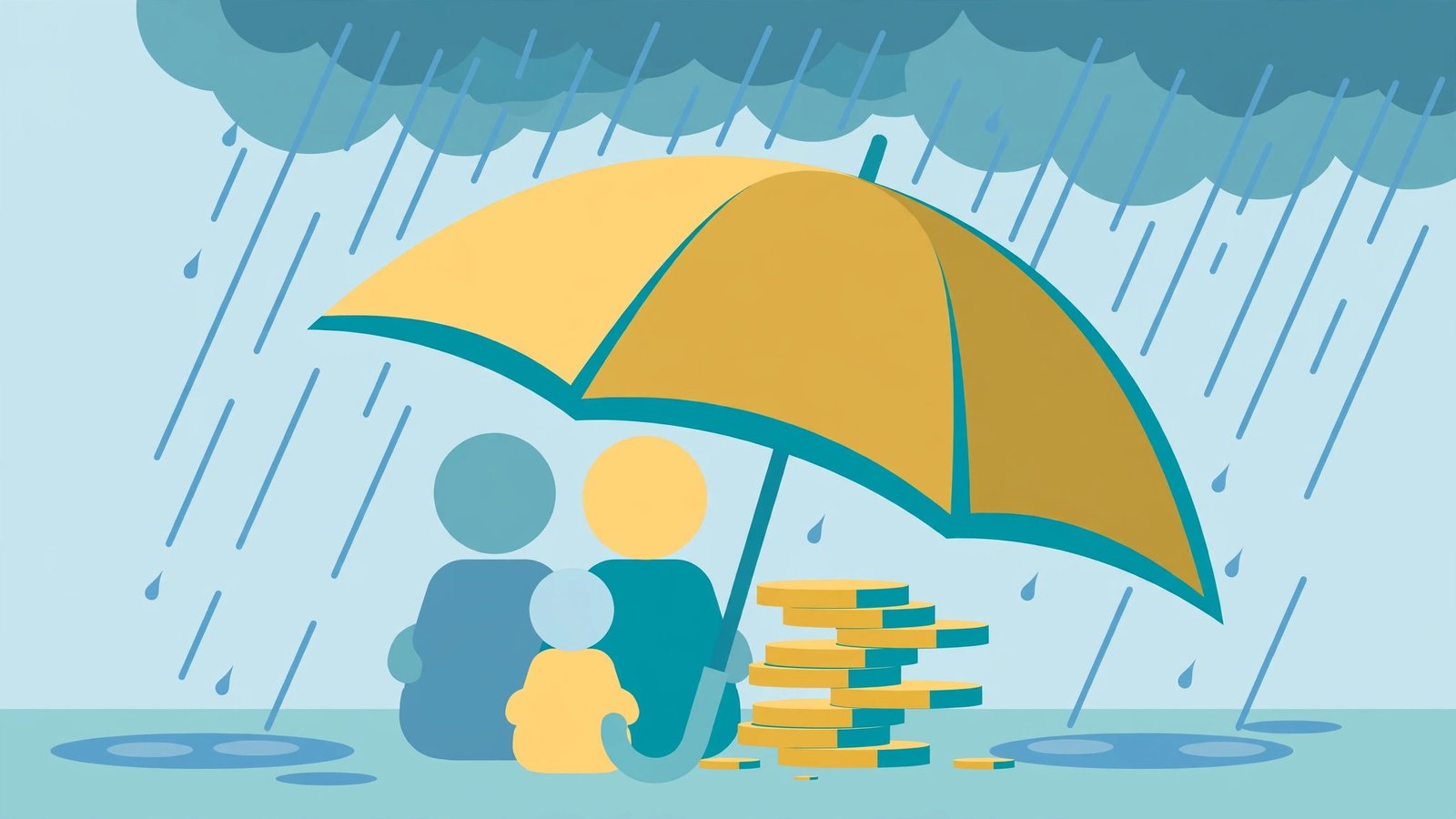
A car breaks down. A medical bill lands in your mailbox. Your hours get cut at work. Life has a way of sending surprise expenses, and without a cushion, one bad month can turn into a debt spiral.
An emergency fund is money set aside specifically for unexpected costs — not vacations, not holiday shopping, just real emergencies. But how much is enough? The answer is not the same for everyone. Here is how to figure out your number in 2026.
The Standard Rule: 3 to 6 Months of Expenses
The most common guidance from financial experts is to save 3 to 6 months' worth of essential living expenses. Not 3 to 6 months of income — of expenses. That distinction matters.
Essential expenses include:
- Rent or mortgage payment
- Utilities (electricity, water, gas, phone, internet)
- Groceries
- Insurance premiums
- Minimum debt payments
- Transportation (car payment, gas, or transit)
- Childcare
Add those up for one month, then multiply by 3 or 6. If your essentials cost $3,000 a month, your target is $9,000 to $18,000.
Why expenses and not income?
Your emergency fund exists to keep a roof over your head and food on the table if income stops. Basing it on expenses gives you a realistic number. Basing it on income can inflate the target and make it feel impossible.
When 3 Months Is Enough
A smaller cushion of about 3 months may be fine if:
- You have a stable job in a field with steady demand, and finding similar work would be quick.
- You have two incomes in the household, so one job loss does not wipe out all earnings.
- You have low fixed costs — for example, you rent a modest apartment and have little debt.
- You have other safety nets, like strong disability insurance or family support you can genuinely rely on.
Three months gives you breathing room to handle most single emergencies — a major car repair, an emergency room visit, a short gap between jobs.
When You Need 6 Months (or More)
Aim for 6 months or beyond if:
- Your income is irregular. Freelancers, gig workers, and commission-based earners face unpredictable dry spells.
- You are the sole earner in your household.
- You work in a volatile industry where layoffs are common or hiring cycles are slow.
- You have dependents — kids, aging parents, or anyone who relies on your income.
- You have a health condition that could lead to time off work.
- You are self-employed, with no employer benefits like paid leave or severance.
Some people in very uncertain situations, such as business owners in cyclical industries, aim for 9 to 12 months. That is not overkill — it is insurance against a long rough patch.
2026 Reality Check: Why Costs Keep Rising
Prices for housing, groceries, insurance, and healthcare have climbed in recent years, which means the emergency fund target you set in 2021 may no longer cover the same ground in 2026. If you built your fund a few years ago, it is worth recalculating.
Pull up your actual spending from the last 2 to 3 months, not what you think you spend. Many people underestimate by 10% to 20%. Use the real number — an emergency fund based on fantasy math will not protect you.
How to Calculate Your Number: Step by Step
Step 1: List your essential monthly expenses
Go through your bank statements and write down every must-pay bill. Leave out dining out, subscriptions you could cancel, and shopping. Be honest about what counts as "essential."
Step 2: Add a small buffer
Add 5% to 10% on top of your total for costs you forgot or that fluctuate, like a higher winter heating bill.
Step 3: Multiply by your month target
Multiply by 3 if your situation is stable, 6 if it is not. That is your goal.
Example
- Essential monthly expenses: $3,200
- Plus 10% buffer: $3,520
- 3-month target: $10,560
- 6-month target: $21,120
Where to Keep Your Emergency Fund
Your emergency fund should be safe, separate, and accessible — but not so accessible that you spend it on non-emergencies.
Good options include:
- High-yield savings account (HYSA). Currently among the best choices: your money earns meaningful interest, is FDIC-insured, and you can withdraw within a day or two.
- Money market account. Similar to an HYSA, sometimes with check-writing ability.
Places to avoid:
- Your regular checking account. Too easy to spend accidentally.
- The stock market. Too volatile — your fund could shrink right when you need it.
- Cash under the mattress. It earns nothing and is not protected.
Keep the fund at a different bank from your checking account if temptation is an issue. Out of sight really does help.
How to Build It From Zero
Saving $10,000 or $20,000 sounds overwhelming. Break it into stages.
Stage 1: The $1,000 starter fund
Your first goal is $1,000 as fast as possible. This covers most minor emergencies — a tire replacement, a plumber visit — and stops you from reaching for a credit card. Sell unused items, pick up extra shifts, or pause non-essential spending for a month or two.
Stage 2: One month of expenses
Once you hit $1,000, keep going until you have one full month of essential expenses saved. This is a major psychological milestone.
Stage 3: Build to your full target
Set up an automatic transfer to your HYSA every payday — even $100 or $200 adds up. Treat it like a bill you must pay. Windfalls like tax refunds, bonuses, or cash gifts should go straight to the fund until it is full.
Common Mistakes People Make
- Investing the emergency fund. Stocks can drop 20% in a bad year. Emergency money must be stable.
- Using it for "emergencies" that are not emergencies. A sale, a vacation deal, or a new phone are not emergencies. Define the rules in advance.
- Stopping at the starter fund. $1,000 is a great start, not a finish line. Keep building.
- Not replenishing after using it. If you dip into the fund, rebuilding it becomes your top financial priority until it is full again.
- Keeping it in checking "for convenience." Convenience is exactly how emergency funds get spent on non-emergencies.
What Counts as a Real Emergency?
Use the fund for sudden, necessary, and urgent expenses:
- Job loss or major income drop
- Emergency medical or dental bills
- Essential car repairs (you need the car for work)
- Urgent home repairs (burst pipe, broken furnace)
- Emergency travel (a family crisis)
Do not use it for predictable costs like annual insurance premiums, planned vacations, or holiday gifts. Those belong in your regular budget or a separate sinking fund.
Frequently Asked Questions
Should I pay off debt or build an emergency fund first?
Do both in stages. Build a $1,000 starter fund first so new emergencies do not add to your debt, then attack high-interest debt aggressively while continuing to save toward your full target.
How much emergency fund do I need if I am single with no kids?
If your job is stable and expenses are low, 3 months of essential expenses is often enough. If your income is irregular or you are the only earner, aim closer to 6 months.
Is $10,000 enough for an emergency fund?
It depends on your monthly expenses. If your essentials are $3,000 a month, $10,000 covers just over 3 months — reasonable for a stable situation. If your essentials are $5,000 a month, it only covers 2 months, which is thin.
Should retirees have an emergency fund?
Yes. Even with retirement income, unexpected medical bills, home repairs, and market downturns happen. Many advisors suggest retirees keep 6 to 12 months of expenses in cash.
Can I keep my emergency fund in a CD?
A short-term CD can work for part of your fund since rates are often slightly higher, but the bulk should stay liquid in a high-yield savings account. You do not want early-withdrawal penalties during a crisis.
This content is for general educational purposes only and is not professional financial advice.